
In the terrifying theater of a horror game, being cast as a maid seems like a death sentence. You’re seemingly powerless, vulnerable, and background dressing for the main event. But what if this role wasn’t a weakness? What if it was the ultimate strategic advantage?
This guide will show you how to survive as a maid in a horror game by transforming your duties into weapons and your knowledge of the house into a map for survival. Forget being a victim; it’s time to become the master of the domain you serve.

The Archetype of the Domestic Servant: From Trap to Tactical Advantage
To survive, you must first understand the role you’ve been given. The domestic servant is a classic horror archetype, but it’s one you can subvert. Your perceived powerlessness is a mask that grants you unique access and insight. Survival means shedding the skin of the passive victim and embracing the role of an active investigator.
The Gothic Housekeeper: Keeper of Keys and Secrets
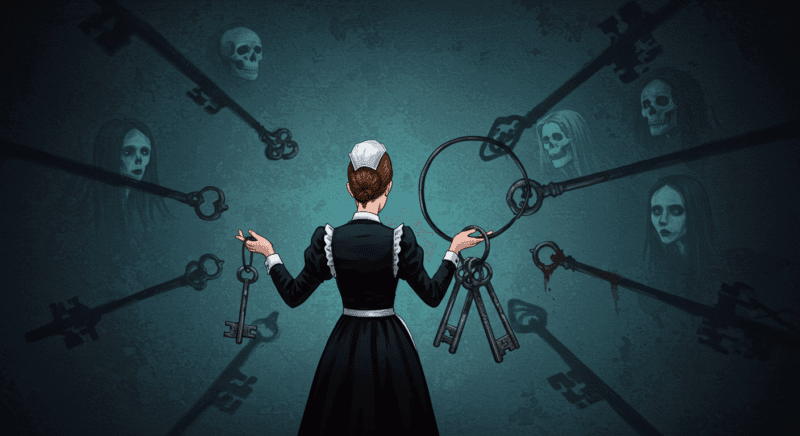
The power of the maid begins in Gothic literature. The housekeeper is more than a cleaner; she is the curator of the game’s primary environment—the house. She exists on a threshold, an outsider to the family but the ultimate insider regarding the manor’s physical secrets.
She holds the “keys, cupboards, and the family’s closeted skeletons,” making her a living database of the very secrets fueling the horror. This role provides an unparalleled understanding of the environment. Cleaning isn’t a chore; it’s reconnaissance. Stocking a pantry is inventory management. You learn the secret passages, the creaky floorboards, and the house’s weaknesses as part of your job. In the information warfare of a horror game, you are positioned to be the master intelligence agent.
The Modern Maiden: Subverting Helplessness
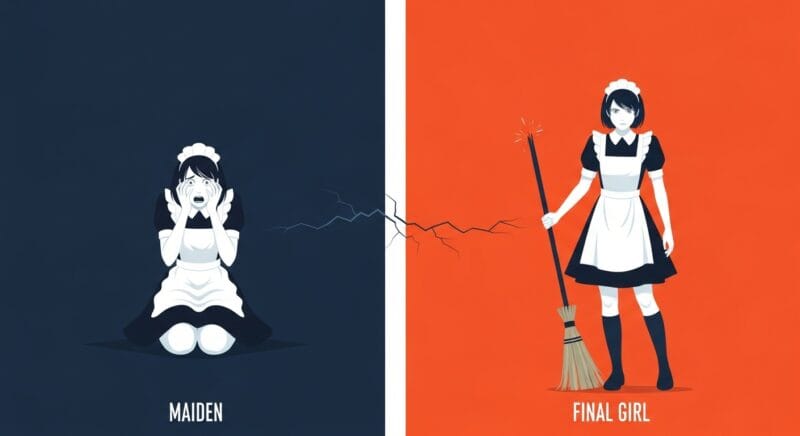
Modern horror often casts the maid as the “Maiden,” a helpless damsel in distress waiting for a hero who likely isn’t coming in a single-player game. Playing this role is a fatal mistake. To win, you must evolve from the Maiden into the resilient “Final Girl.”
Coined by Carol Clover, the Final Girl is the last one standing who confronts the killer. She survives because she is intelligent, curious, and vigilant. Crucially, she doesn’t wait for rescue; she takes action, often picking up a weapon and fighting back. This provides a clear path for a maid protagonist: transition from a passive plot device to the active driver of your own survival.
The Architecture of Fear: Deconstructing the Horror Environment
The domestic space in a horror game is not a backdrop; it’s an active enemy. Designers use architectural psychology to create dread. Your greatest advantage is your intimate, working knowledge of this space. You must use it to dismantle the fear traps and assert your own logic.
The Uncanny Home: Weaponizing Domesticity
The fear of a haunted house comes from the concept of the uncanny, or das Unheimlich—literally “the un-homely.” It’s the feeling of dread when the familiar becomes strange. A doll that seems to move, a door that opens on its own—these are designed to pervert the safety of home.
Game designers achieve this through:
- Disorienting Spaces: Looping corridors and shifting layouts that defy logic.
- Environmental Storytelling: Embedding past traumas into the world itself, like a sealed-off room representing a repressed memory.
- Eroding Safety: Making “safe rooms” feel insecure through subtle changes or unpredictable hazards.
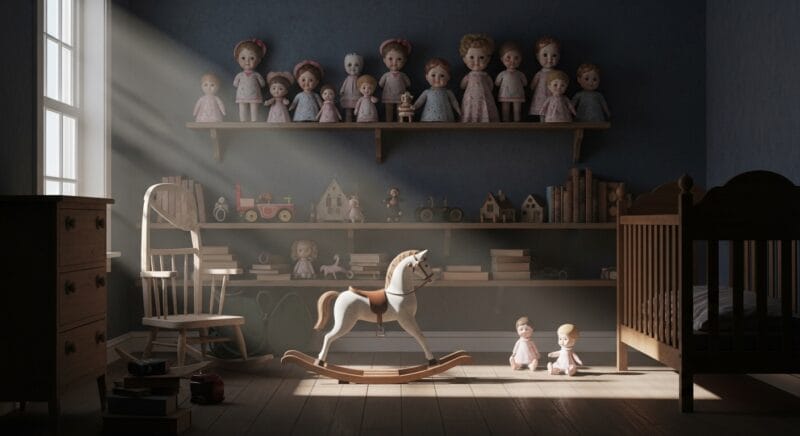
Your counter-strategy is to re-familiarize the uncanny. A maid’s job is the mastery of the homely. You know which floorboards creak because you have to report them. You know where the circuit breaker is. By imposing this practical, systematic knowledge, you turn a place of terror back into a mere building—a level to be understood and exploited.
Navigating the Labyrinth: Puzzles and Environmental Clues
Horror games use puzzles to gate progress and force you into dangerous areas. These often involve finding items like keys, fuses, or cranks. Sometimes, the solutions defy conventional logic, which can be frustrating if you’re stuck thinking like a typical gamer.
This is where you gain the “Domestic Logic Advantage.” A maid can approach these problems from a practical, professional standpoint.
- Where would the lady of the house hide a spare key to her jewelry box?
- What cleaning chemicals under the sink could be mixed to create a smokescreen or a corrosive?
- Could the grandfather clock’s maintenance schedule be manipulated to create a distraction?
You can interpret the game’s environmental storytelling not as just spooky flavor text, but as a direct reflection of the household’s habits and secrets. A deep scratch on a doorframe isn’t just a scary detail; it’s evidence. By applying your professional expertise, you turn background details into actionable intelligence.
The Mechanics of Vulnerability and Survival
Horror games are built on systems of scarcity and helplessness. Your goal is to subvert these systems by shifting your perspective from a victim to the logistical manager of the environment.
The Survival Economy: Mastering Scarcity
Survival horror games deliberately make you feel vulnerable by limiting resources. Ammunition, healing items, and flashlight batteries are rare. This is the “survival economy,” designed to make fighting a last resort. This is often a core component of even the best zombie games for PS4.
Key mechanics include:
- Resource Scarcity: Limited ammo and healing items force tough decisions.
- Limited Inventory: Small inventory space makes you choose what’s essential.
- Frail Avatar: Your character can’t take much damage.
- Restrictive Save Systems: Infrequent save points raise the stakes of every action.
These mechanics are designed for a desperate scavenger in an unfamiliar world. But you are not a scavenger. You are the Quartermaster. You’re the one who stocks the first-aid kits and knows where the lamp oil is kept. Your first priority should be to conduct a logistical sweep, gathering resources from their known locations and creating caches in safe areas. You turn domestic duties into a supply chain that counters the game’s engineered scarcity.
Know Thy Enemy: A Taxonomy of Horror Antagonists
Fear comes from the unknown. To survive, you must demystify the threat. By categorizing the enemy, you can shift from reactive terror to proactive strategy. This table breaks down common horror antagonists and maid-specific strategies to defeat them.

| Antagonist Archetype | Primary Mechanics & Behaviors | Key Vulnerability Exploited | Recommended Survival Strategy (Maid’s Focus) |
| The Persistent Stalker | Invulnerable or highly resilient; follows the player relentlessly; unscripted patrols. Examples: Mr. X, Remothered‘s stalkers. | Player’s Sense of Safety: Eradicates “safe rooms,” creating constant pressure. | Environmental Mastery: Use intimate knowledge of secret passages, dumbwaiters, and shortcuts to break line of sight. Create sound distractions with bells or clocks to manipulate patrol paths. |
| The Sound-Sensitive Hunter | Blind with acute hearing; reacts to player noise. Examples: Maid of Sker‘s Quiet Ones. | Player’s Lack of Control: Punishes basic movement and even involuntary sounds like coughing. | Auditory Discipline & Sabotage: Know which floors are quiet (carpet) vs. noisy (wood). Use ambient house sounds to mask your movement. Create loud noises in distant rooms to lure the hunter away. |
| The Psychological Tormentor | Non-physical threat; attacks sanity, causes hallucinations and distorts reality. Examples: The Maid‘s entity. | Player’s Perception: Undermines your ability to trust what you see and hear. | Sanity Management & Grounding: Use your concrete tasks as mental anchors. Is the silverware polished and in its place? Use these unchanging duties to distinguish hallucinations from the real state of the house. |
| The Deceptive Human | Intelligent, manipulative, and emotionally volatile. Threat level is dynamic. Examples: Adrian from How to Survive as a Maid in a Horror Game. | Player’s Empathy & Trust: Exploits social instincts, turning dialogue into a high-stakes trap. | Social Stealth & Emotional Regulation: Treat conversations like boss battles. Use your subservient role as a mask to observe triggers and de-escalate their intent, performing the “perfect maid” role to manage their psychology. |
Applied Survival Strategies: Case Studies
Let’s apply these theories to specific scenarios you might encounter.
1: The Stalker in the Manor (Remothered, Maid of Sker)
In games like Remothered or Maid of Sker, you face relentless physical pursuers. In Maid of Sker, where enemies hunt by sound, your knowledge of the house’s acoustics is your best weapon. You know the quiet routes and can create deliberate sound diversions to lure enemies away, just like knowing how to methodically solve the puzzles in Resident Evil Village to get the 4 angel masks.
In Remothered, stalkers are intelligent. Here, the maid’s knowledge of the secondary architecture—servant’s passages, back stairs, laundry chutes—is paramount. These routes, unknown to the main inhabitants, become your private highways for evasion, allowing you to outmaneuver your pursuer with superior efficiency.
2: The Psychological Haunting (The Maid)
When the threat attacks your mind, your routine becomes your anchor. In a game like The Maid, where reality is unstable, your job provides a baseline. Polishing silver, making beds, sweeping floors—these are logical, order-imposing tasks.
Use your work to test reality. If a ghost appears but doesn’t disturb the porcelain figures you just aligned, you can deduce it’s a hallucination. If a door you locked is now open, that’s a real threat. By methodically imposing domestic order, you fight back against the psychological assault, reinforcing your own sanity.
3: The Yandere Master (How to Survive as a Maid in a Horror Game)
This unique scenario, from the manhwa of the same name, involves surviving a relationship with an obsessive, murderous master. Here, survival is social. The protagonist, Hilda, must perfectly perform her duties to build trust and de-escalate her master Adrian’s “intent to kill” percentage.
Your role as a maid is the primary survival tool. Your “health bar” is the master’s emotional stability. Every chore completed is a power-up, and every successful conversation is a boss battle won. This is the ultimate application of the maid’s skills, turning servitude into the primary weapon of psychological warfare.
Conclusion: From Final Girl to Master Survivor
The maid, a character seemingly defined by powerlessness, is paradoxically the person best equipped to survive a horror game. Your survival comes not in spite of your role, but directly because of it.
Your intimate knowledge of the environment, your ability to subvert the survival economy, and your unique social position grant you unparalleled strategic advantages. By rejecting the passive Maiden archetype and embracing the agency of the Final Girl, you transform the tools of your trade—keys, cleaning supplies, and even the performance of servitude—into the very instruments of your salvation. In the house of horrors, the one who knows it best is the last one standing.
Frequently Asked Questions (FAQ)
Why is the maid such a common character in horror?
The maid is a classic archetype from Gothic fiction. Her unique position as an “insider-outsider” makes her a perfect vehicle for exposing a family’s dark secrets. She has access to every room and knows the house’s history, making her a natural source of exposition and a character who can move the plot forward.
What is the difference between the “Maiden” and “Final Girl” archetypes?
The “Maiden” is a passive “damsel in distress” who exists to be rescued or become a victim. The “Final Girl” is an intelligent, resilient, and resourceful character who survives by actively investigating the threat and fighting back. To survive, a maid protagonist must embody the traits of the Final Girl.
How can I use the environment against a stalker enemy?
Use your intimate knowledge of the layout. Lure stalkers into dead ends, use secret passages to escape, and create sound distractions to manipulate their patrol paths. Knowing the house better than your enemy is your single greatest advantage
What is the “Domestic Logic Advantage”?
This is the ability to solve in-game puzzles using the practical knowledge of a maid rather than abstract “game logic.” It means thinking about where spare keys would be hidden for convenience, what household items could be combined or repurposed, or how maintenance schedules could be exploited.
Are there any actual horror games where you play as a maid?
Yes. While not a huge subgenre, examples exist. The Thai horror film The Maid (2020) provides a cinematic example. In gaming, there is the indie psychological horror game The Maid and games with similar dynamics like Remothered and Maid of Sker. The concept is also famously explored in the Korean manhwa How to Survive as a Maid in a Horror Game.

Jakub is a horror game scholar, dedicated to the academic and critical analysis of the genre. He explores the psychological roots of fear in interactive media, analyzing how sound design, lighting, and narrative create terror. His work is for readers who want to understand why horror games are so effective.