
The Fanatec Clubsport V3 pedals are a frequently discussed component in the world of sim racing. Positioned as a high-end offering, they are engineered for users seeking a higher degree of realism and control in their virtual driving experience. This technical analysis explores the Clubsport V3’s design, materials, performance characteristics, and customization options, providing a purely informational overview for enthusiasts.
The pedals are available in two primary configurations: the standard Clubsport V3 and the Clubsport V3 Inverted. Both models share a core technological foundation but differ in orientation and included accessories, catering to different preferences for a sim racing setup.
Fanatec Clubsport V3 & V3 Inverted: At a Glance
This table provides a direct comparison of the key specifications for both the standard and inverted models of the Fanatec Clubsport V3 pedals.
| Feature | Fanatec Clubsport V3 | Fanatec Clubsport V3 Inverted |
| Main Material | CNC Machined Aluminum, Steel | CNC Machined Aluminum, Steel |
| Pedal Orientation | Floor-mounted (standard) | Hanging (inverted) |
| Brake Sensor | 90kg Adjustable Load Cell | 90kg Adjustable Load Cell |
| Throttle Sensor | Contactless Hall Sensor | Contactless Hall Sensor |
| Clutch Sensor | Contactless Hall Sensor | Contactless Hall Sensor |
| Max Resolution | 12-bit (4096 values) on all axes | 12-bit (4096 values) on all axes |
| ABS Brake Vibration | Yes, integrated motor | Yes, integrated motor |
| Throttle Vibration | Yes, integrated motor | Yes, integrated motor |
| Damper Kit | Optional Accessory | Included & Pre-installed on Brake |
| Platform Compatibility | PC, PlayStation (with licenced wheelbase), Xbox | PC, PlayStation (with licenced wheelbase), Xbox |
A Closer Look at the Clubsport V3’s Construction and Materials
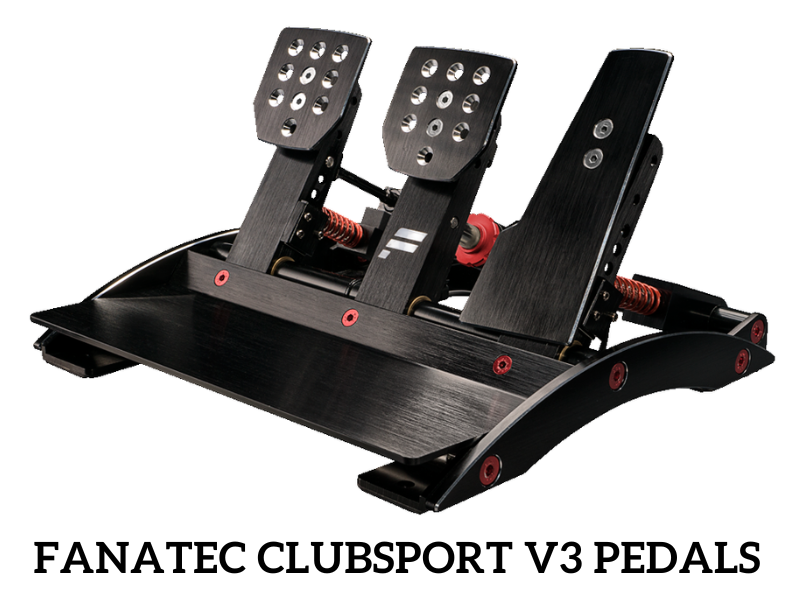
The initial impression of the Clubsport V3 pedals is defined by their robust physical construction. The unit is assembled with a focus on durability and precision, utilizing high-grade materials.
Frame and Build Quality
The entire assembly is built from CNC machined aluminum, giving it substantial weight (approximately 15 pounds) and rigidity. The frame is reinforced with solid steel rods and axes, which provides a stable platform and minimizes flex under heavy braking forces.
Aesthetic details include contrasting red and silver anodized components and chamfered edges that reveal the underlying aluminum. These elements, while visual, are a byproduct of the precision machining process.
Key Takeaway: The all-metal construction, featuring CNC aluminum and steel components, is designed to withstand the significant, repetitive forces common in sim racing, making it a durable hardware choice.
Core Technical Specifications
The performance of the Clubsport V3 is rooted in its internal hardware. The specifications are critical to its function in a sim racing cockpit.
- Sensors: The throttle and clutch pedals utilize contactless magnetic Hall effect sensors. These are notable for their durability, as the lack of physical contact prevents wear and tear over time, ensuring consistent performance.
- Resolution: All three pedal axes operate on a 12-bit resolution, which translates to 4096 distinct values. This high resolution allows for exceptionally fine and precise inputs, a crucial factor for throttle modulation and trail braking.
- Connectivity: The pedals can be connected directly to a PC via USB or routed through a compatible Fanatec wheelbase.
In-Depth Pedal Performance Analysis
Each pedal on the Clubsport V3 is engineered with a specific function and feel in mind, aiming to replicate the mechanical feedback of a real vehicle.
Throttle Pedal: Linearity and Response
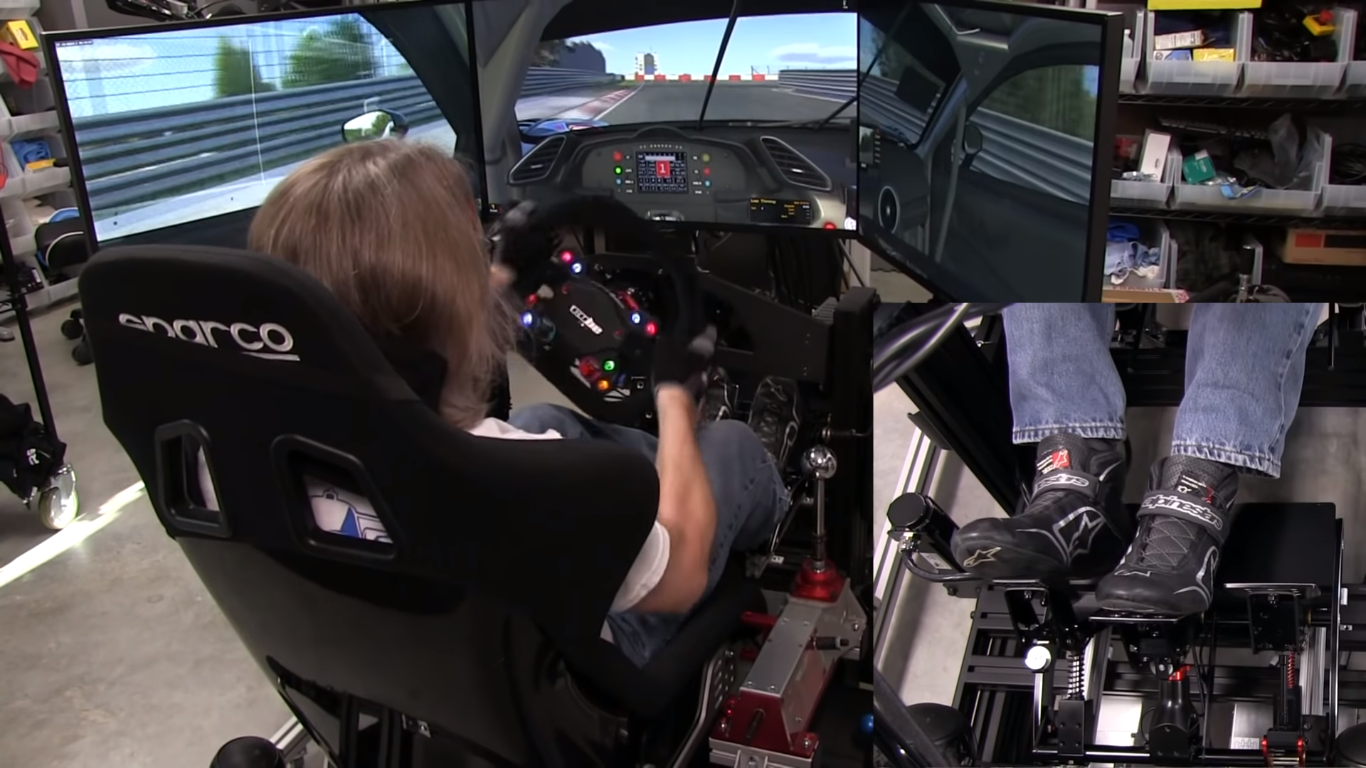
The throttle action is designed to be smooth and linear. It uses a spring to provide resistance, and an optional, stiffer spring is included for users who prefer a heavier feel. The use of a Hall effect sensor ensures that the input reading is consistent and free from the potential spiking or degradation that can affect potentiometer-based pedals.
Brake Pedal: The 90kg Load Cell System
The centerpiece of the Clubsport V3 is its pressure-sensitive brake pedal. Unlike entry-level pedals that measure travel, the V3 uses a 90kg load cell sensor. This means the braking force is determined by how much pressure is applied, not how far the pedal is pushed.
This system is intended to mimic the feel of a hydraulic brake system and allows the driver to develop muscle memory for consistent braking thresholds. The stock configuration includes a preload adjustment knob, which changes the initial resistance of the pedal by compressing internal rubber and polyurethane components. For those seeking even greater control over braking feel, a sim racing handbrake can complement the setup for certain disciplines.
Clutch Pedal: A Degressive Mechanism
The clutch pedal features a degressive mechanism designed to replicate the feeling of a clutch fork engaging and disengaging a pressure plate. The resistance feels heaviest at the beginning of the travel and then drops off, providing a distinct tactile sensation that can aid in finding the bite point for smoother race starts.
Haptic Feedback: Understanding the Vibration Motors
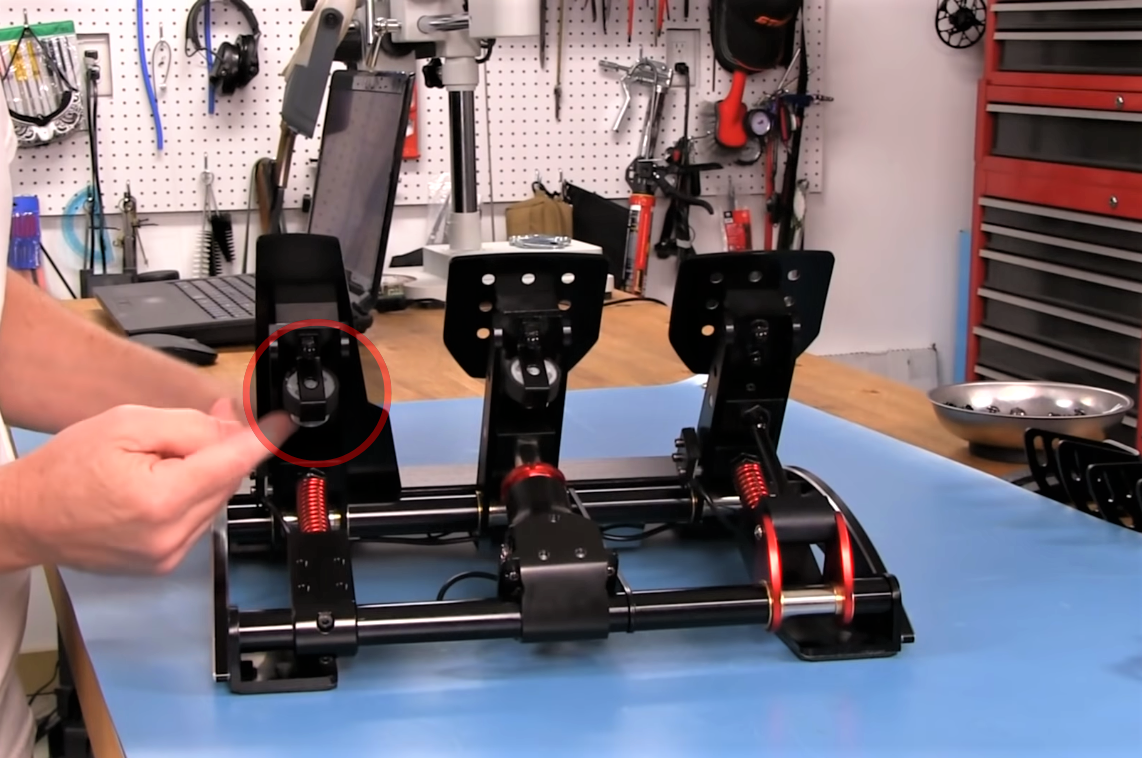
A unique feature of the Clubsport V3 pedals is the inclusion of two vibration motors.
- Brake Pedal Motor: This motor can be controlled by compatible sim racing games to provide haptic feedback during brake lock-ups or when ABS activates. This provides a clear physical cue that the tires have lost traction under braking.
- Throttle Pedal Motor: Similarly, the throttle motor can indicate rear tire slip or wheelspin, alerting the driver to a loss of traction during acceleration.
These motors add another layer of immersion and can provide valuable feedback, especially for drivers who may have difficulty perceiving subtle audio cues for traction loss.
Adjustability and Customization
A significant aspect of the Clubsport V3 is its high degree of adjustability, allowing users to tailor the ergonomics and feel to their specific preferences. For a comprehensive setup, these pedals are often mounted to a dedicated racing wheel stand.
D-Shaped Pedal Plates
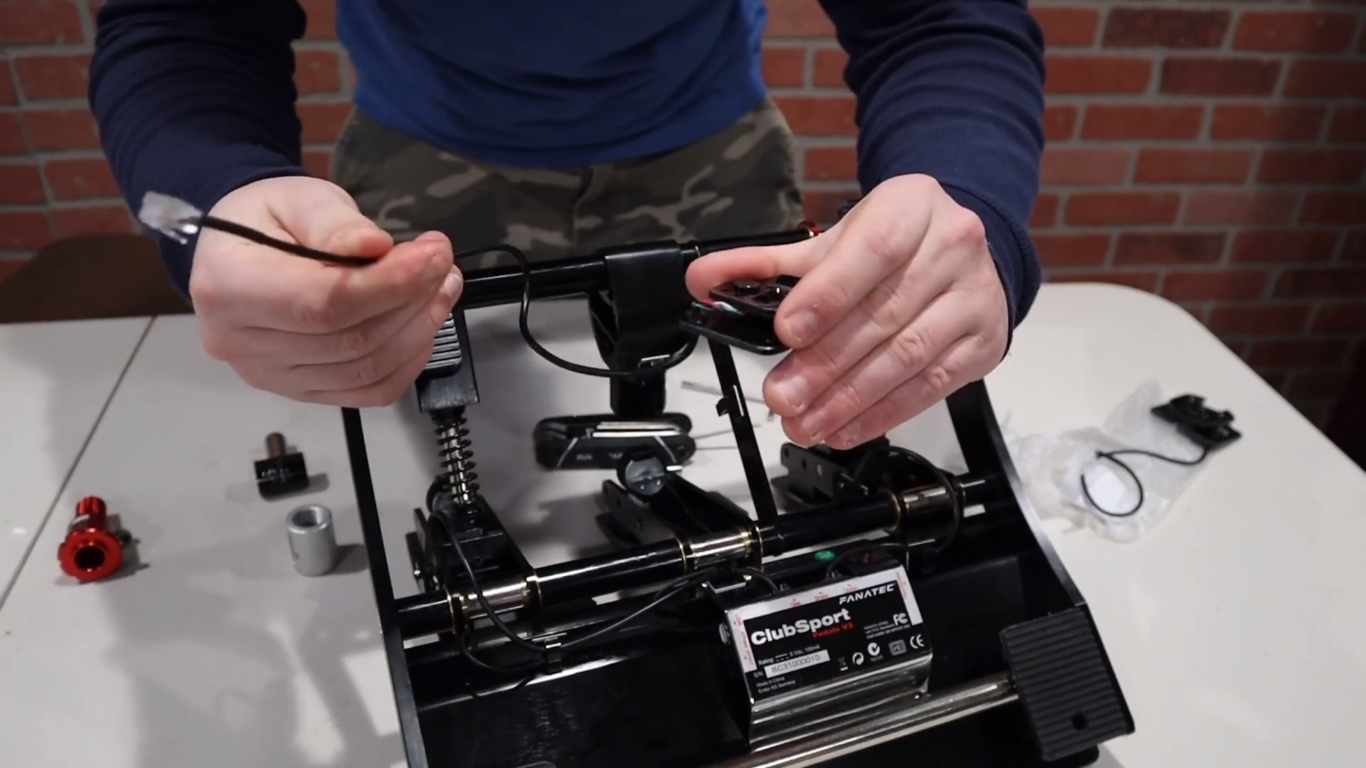
The pedals come with D-shaped, anodized aluminum pedal plates. These can be adjusted both vertically and horizontally, allowing the user to alter the spacing between the pedals to facilitate techniques like heel-and-toe downshifting.
Preload and Stiffness Adjustments
Beyond the pedal plates, the mechanical properties of the pedals themselves are adjustable.
- Brake Preload: As mentioned, a tool-free knob allows for on-the-fly adjustment of the brake’s initial resistance.
- Throttle Spring: The throttle’s return force can be increased by swapping to the included stiffer spring.
- Angle: The angle of each pedal can be individually adjusted.
Optional Upgrades for a Tailored Experience
Fanatec offers two key optional kits that further enhance the adjustability of the V3 pedals.
The Brake Performance Kit
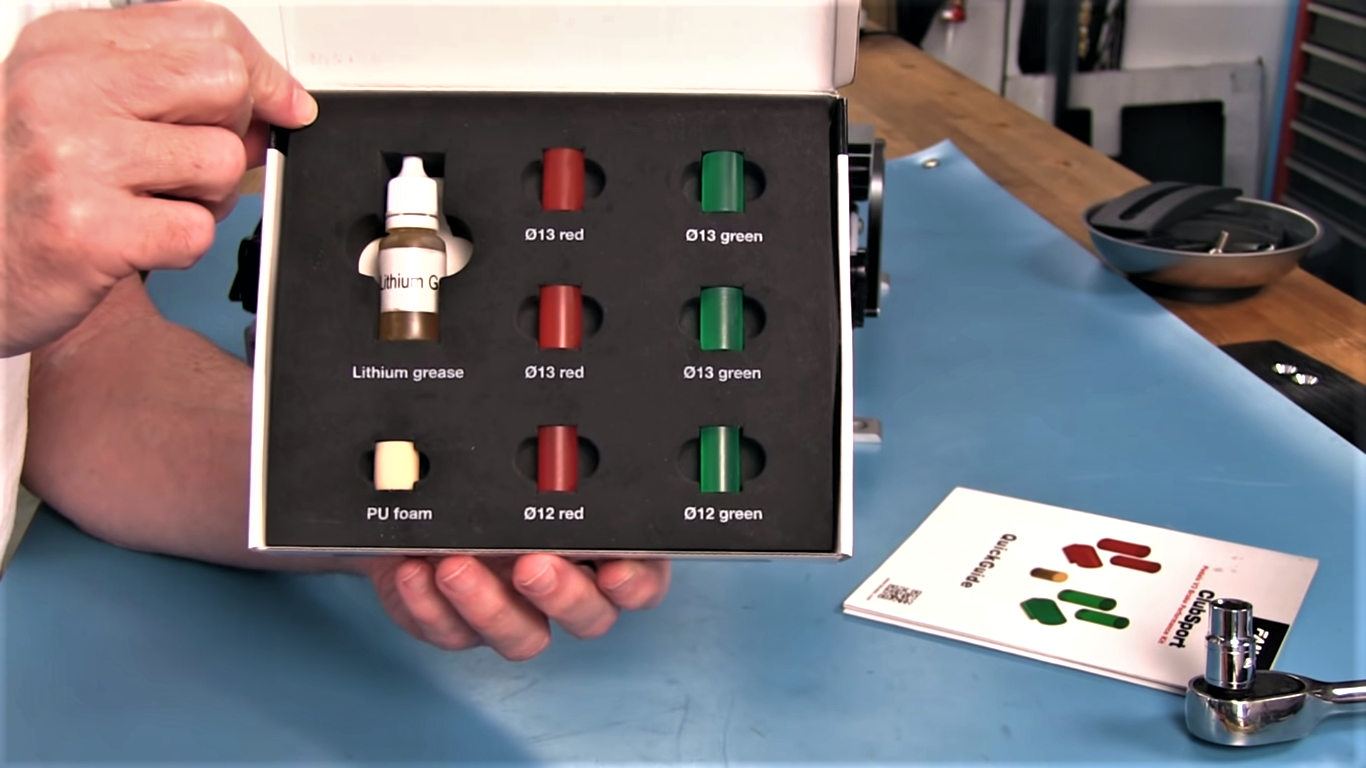
This is an accessory designed to provide a more realistic, progressive brake feel, similar to that of a race car. The kit replaces the stock foam and rubber configuration with a series of color-coded polyurethane and elastomer springs of varying stiffness (identified as red and green).
By combining these springs in different configurations, users can create a wide range of resistance curves, from a soft initial press that progressively hardens to a very firm, short-travel feel. A guide chart is included to explain the different combinations.
The Damper Kit
The damper kit is a hydraulic shock absorber that can be added to the throttle and/or brake pedal.
- On the throttle, it adds resistance and smooths out the pedal’s movement, which can aid in more precise throttle application.
- On the brake, it provides a hydraulic feeling, further simulating a real car’s brake system. It’s important to note this kit comes pre-installed on the brake pedal of the Clubsport V3 Inverted model.
Understanding the Fanatec Clubsport V3 Inverted Model
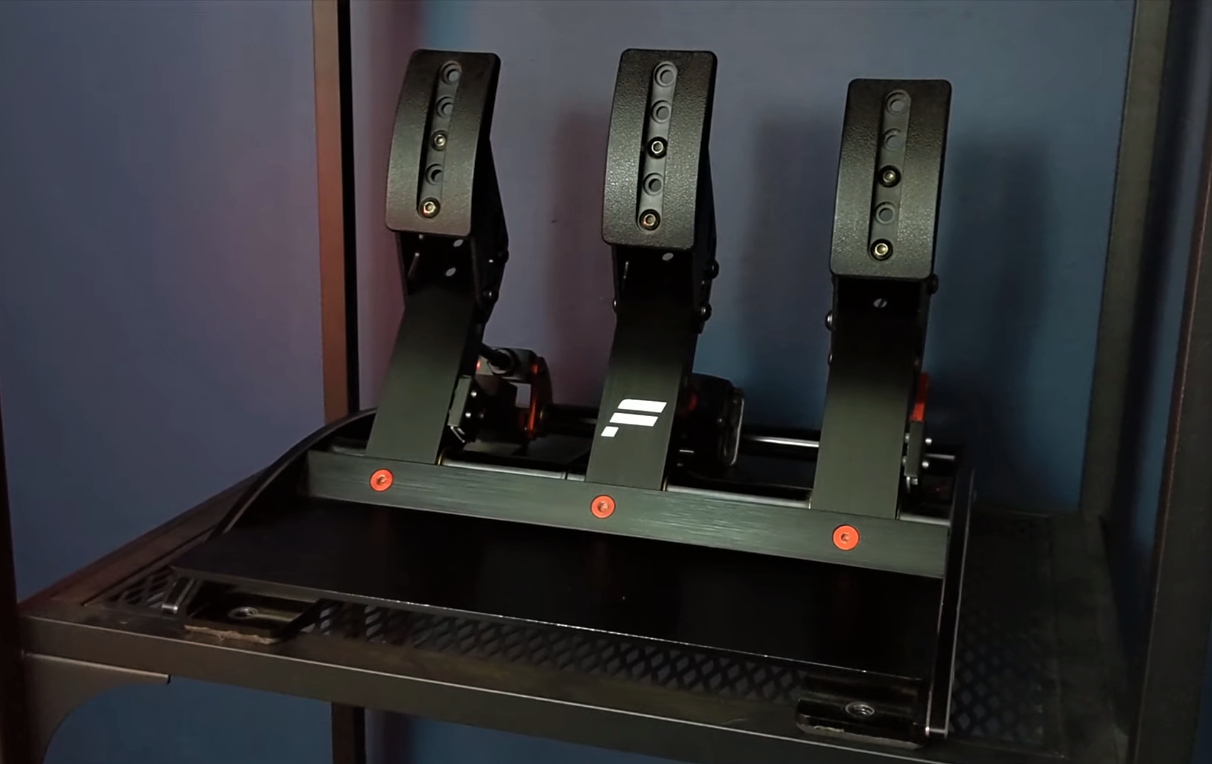
The Clubsport V3 Inverted pedals are functionally very similar to the standard model but feature a hanging, or “inverted,” orientation. This design mimics the pedal arrangement found in most road cars and many race cars.
Beyond the orientation, the key difference is that the V3 Inverted model comes with the Damper Kit pre-installed on the brake pedal as a standard feature, along with an extended frame and heel rest to accommodate the different layout.
Software and Calibration Guide
Proper software setup is crucial for extracting maximum performance from the Clubsport V3 pedals.
Driver Installation
The first step is to download the appropriate PC driver from the Fanatec website. It is generally advisable to use the latest stable release, though beta versions with new features are also available.
Manual Mode Calibration
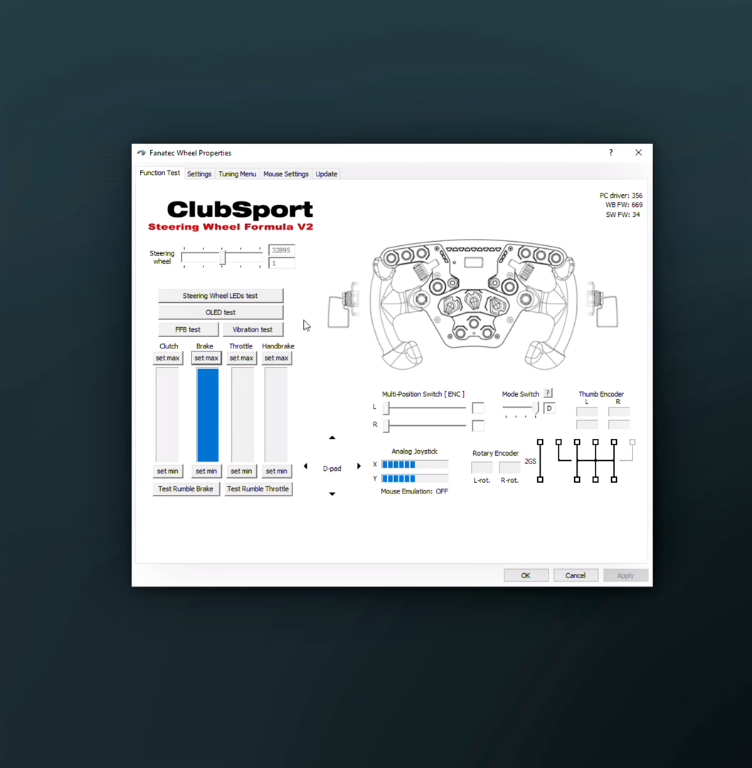
Once the driver is installed, the Fanatec wheel property page becomes accessible.
Expert Tip: Within the pedal properties, it is critical to enable “Manual Mode.” This disables the auto-calibration feature and gives the user full control over setting the minimum and maximum travel for each pedal.
- Throttle/Clutch: To eliminate any dead zone at the end of the pedal’s travel, press the pedal down to the point just before it bottoms out, then click the “Set Max” button. This ensures that when the pedal is fully depressed, the software registers 100% input.
- Brake: Brake calibration is more subjective. A common method is to press the pedal to the maximum force you would comfortably use in-game for threshold braking (the point just before locking the wheels). At that pressure, click the “Set Max” button. This maps the full range of brake output to your usable physical force, increasing control.
Frequently Asked Questions (FAQ)
What is the primary advantage of a load cell brake?
A load cell brake measures pressure rather than travel distance. This is considered more realistic as it mimics how hydraulic brakes in a real car operate. It allows the driver to build muscle memory for applying a specific amount of braking force, leading to greater consistency.
Are the Fanatec Clubsport V3 pedals compatible with PlayStation 5 and Xbox?
Yes, but with a condition. The pedals themselves do not contain the necessary security chip for direct console compatibility. They must be connected to a PlayStation-licensed or Xbox-compatible Fanatec wheelbase, which then enables their use on the respective console.
Can the Clubsport V3 pedals be used with wheels from other brands like Logitech or Thrustmaster?
On a PC, yes. The Clubsport V3 pedals can be connected directly to the PC via USB and will function as a separate input device, independent of the steering wheel. This allows them to be used alongside a Logitech G920 or a Thrustmaster T300RS. On consoles, this is generally not possible; they must be used within the Fanatec ecosystem.
Is the Brake Performance Kit a necessary upgrade?
“Necessary” is subjective and depends on user preference. The stock brake pedal is highly functional. However, the Brake Performance Kit provides a much wider range of adjustment for pedal stiffness and feel. Sim racers who prioritize a very firm, progressive brake that more closely resembles a track car’s braking system will find significant value in this upgrade.
What is the difference between the standard Clubsport V3 and the V3 Inverted?
The primary difference is the orientation: the standard V3 has floor-mounted pedals, while the V3 Inverted has hanging pedals, like in a typical road car. The V3 Inverted also comes with the Damper Kit pre-installed on the brake pedal and has a longer frame and heel rest.
How do you connect the Clubsport V3 pedals to a PC?
There are two methods: you can connect the pedals directly to a USB port on your computer, or you can connect them to the dedicated pedal port on a Fanatec wheelbase using the included RJ12 cable.

With a background in mechanical engineering and over a decade in competitive sim racing, Kenji serves as our lead Sim Racing Physics & Hardware Analyst. He deconstructs complex topics like force feedback and suspension geometry, helping readers understand the crucial engineering behind a perfect lap time. Kenji’s passion is to translate real-world motorsport principles into actionable knowledge for the sim racing community.